The Old-Country Cookbook
“A full table, a warm house, an open window.”
When our founders left Bessarabia, they carried little — but they carried the recipes. These are the dishes of the old-country kitchen: the hearty Moldovan and Ashkenazi home cooking of a borderland where cabbage, beans, cornmeal, and good wine fed everyone, and where a lively supper was simply proof the cook had done well.
Challah
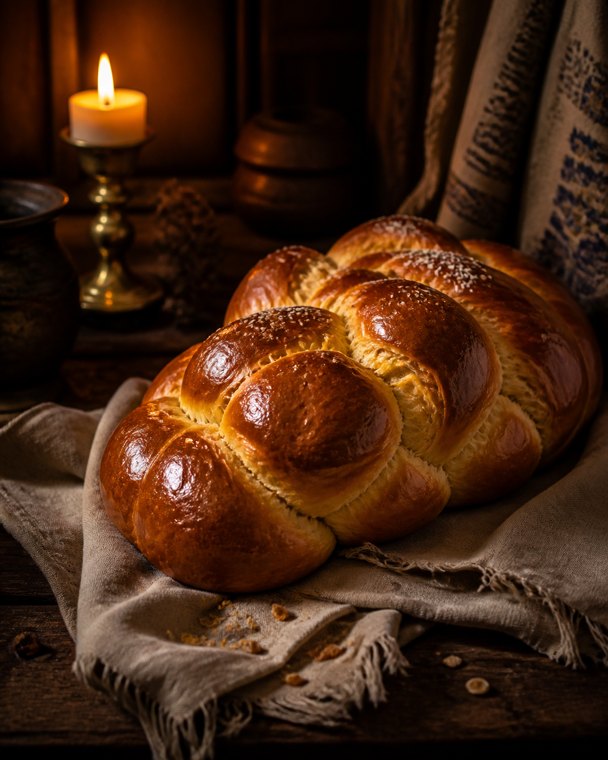
Golden, glossy, and gently sweet, challah is the loaf that crowned every celebration of the old country. Braided from enriched dough and brushed with egg, it tears into soft, tender ribbons. The founders held that no table was truly set until the challah was on it.
Borscht
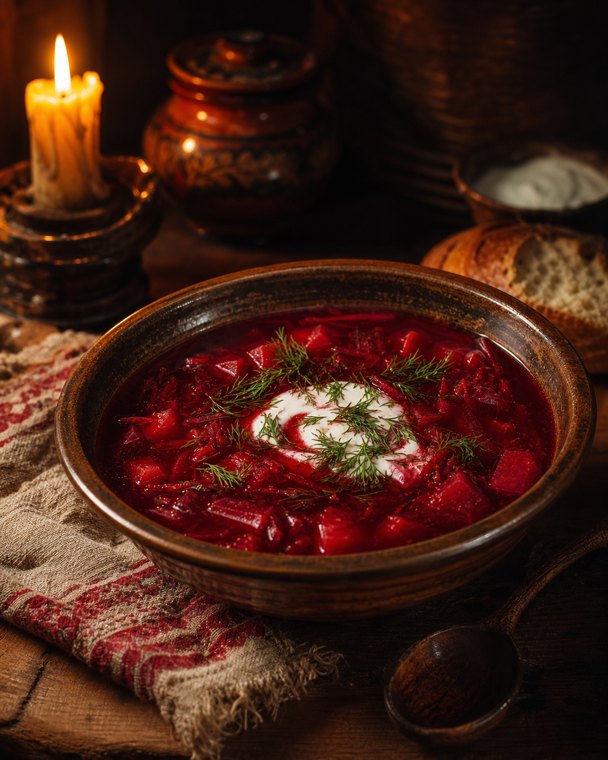
A deep ruby soup of beets, simmered with onion, carrot, and a knob of cabbage, finished with a swirl of sour cream that turns it a glorious pink. Served hot in winter, cold in summer, and with feeling in all seasons. The beet, the founders insisted, is the most honest vegetable.
Stuffed Cabbage Rolls
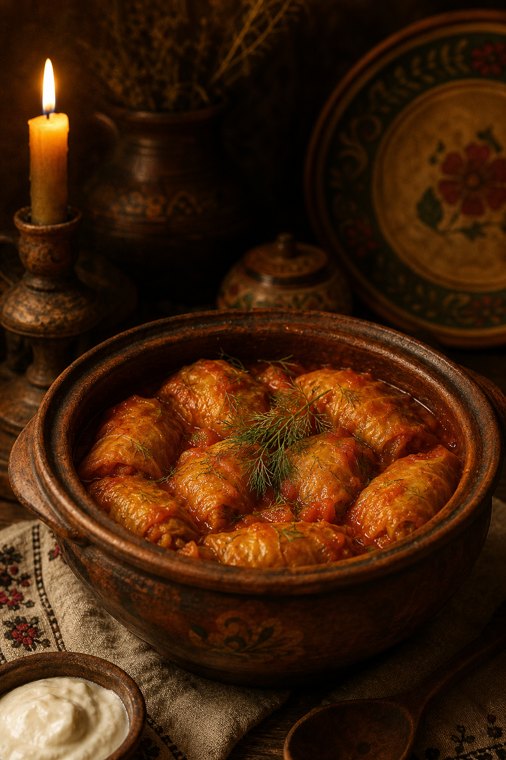
Cabbage leaves wrapped around rice and seasoned meat, nestled in a pot and braised low and slow until meltingly tender, often in a sweet-sour tomato sauce. The signature dish of the homeland and the unofficial crest of our Department of Applied Aerodynamics. Where there is cabbage, there is destiny.
Mămăligă
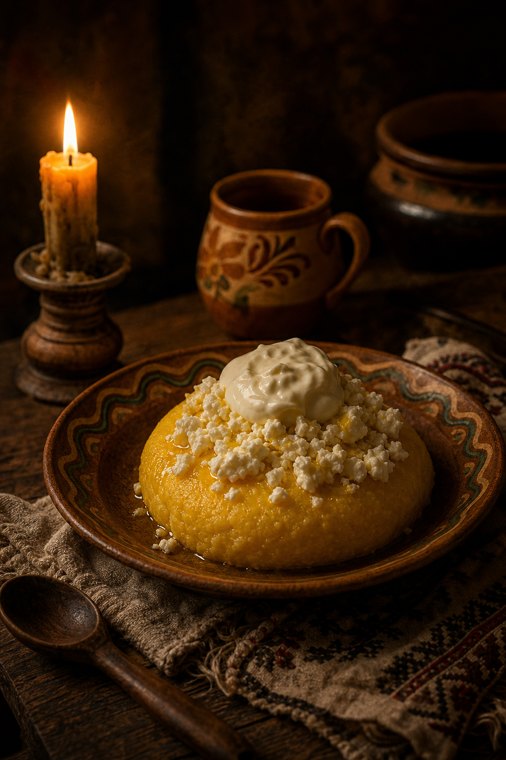
Cornmeal simmered and stirred into a thick golden mound, the everyday bread of Bessarabia. Served with sheep’s cheese (brânză), a spoon of sour cream, or a fried egg on top. Humble, filling, and the quiet foundation under nearly every meal the founders ever ate.
White Bean Stew
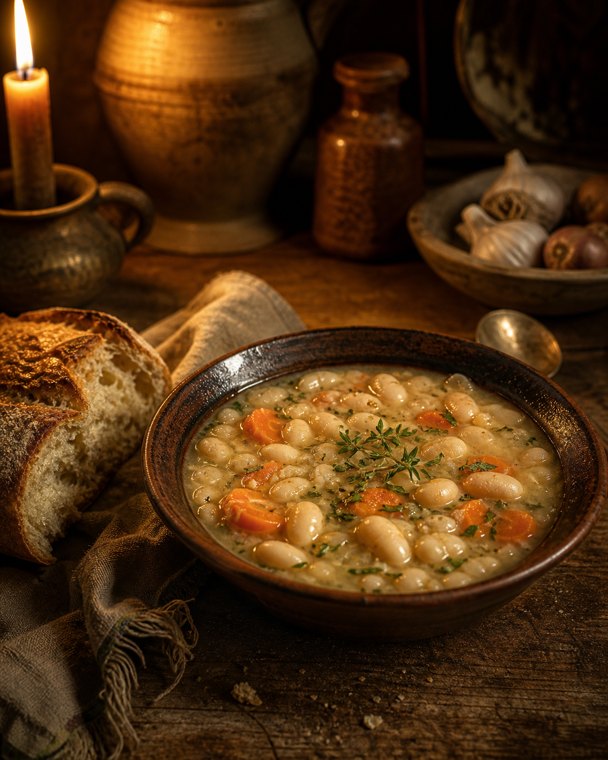
Soft white beans cooked down with onion, carrot, and a generous hand of garlic, sometimes mashed to a rustic spread, sometimes left brothy. Cheap, nourishing, and beloved across the whole region. It carried the founders through long winters and longer faculty meetings — and gave the institution its true and lasting voice.
Lokshen Kugel
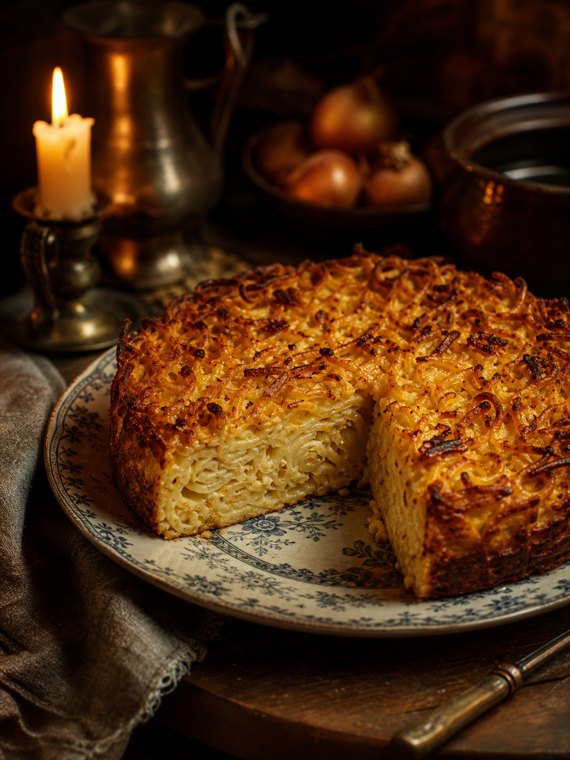
Egg noodles baked with eggs, a little sweetness, and sometimes raisins into a comforting, custardy pudding with crisp golden edges. A holiday treasure and a Sunday-afternoon kindness. The founders served it warm and argued, happily, over whether raisins belong.
Plăcintă
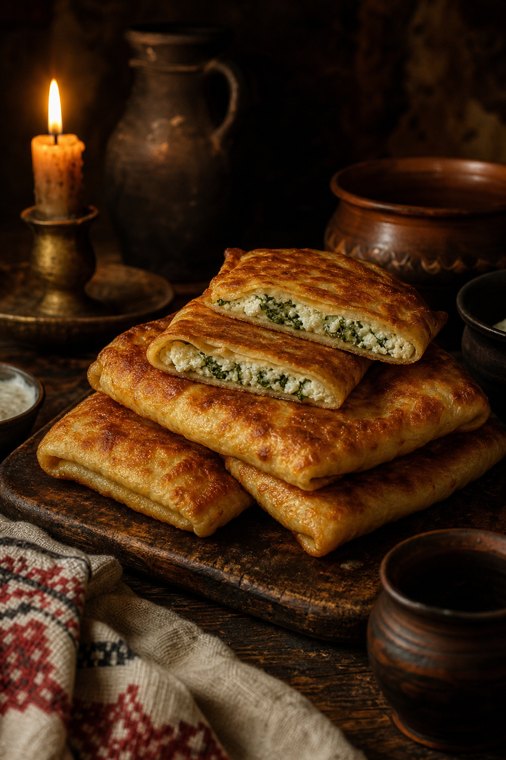
Thin pastry folded around a filling — soft cheese, potato, cabbage, pumpkin, or apple — then pan-fried or baked until blistered and golden. The handheld joy of every market day and every festival in the old country.
Tzimmes
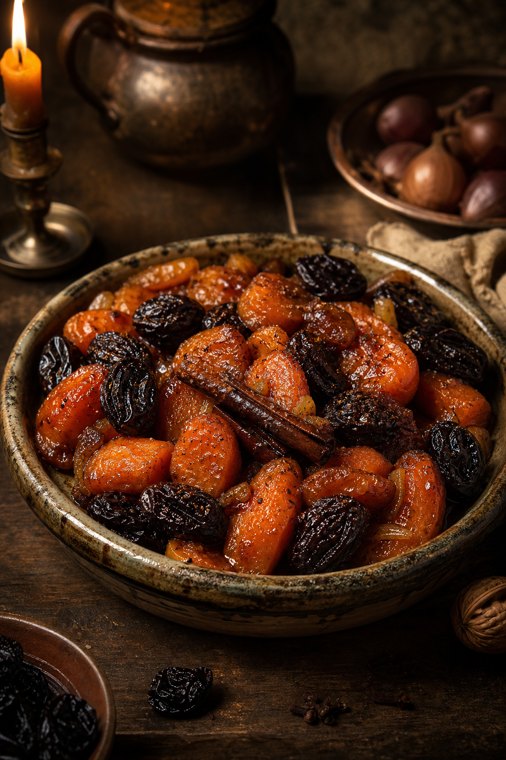
A glossy, golden braise of carrots, prunes, and sometimes beans, sweetened with honey and warm spice until everything turns tender and jammy. To make a whole tzimmes of something, the old saying goes, is to make a big, fussy fuss — which is exactly what this dish deserves.
A Glass of Bessarabian Red

No old-country table is complete without it. The homeland is true wine country — neighboring Moldova keeps the largest cellar on earth, some two hundred kilometers of cool limestone tunnels. Pour generously, toast the founders, and let the wine do what wine does: make the long meal merry and the company forgiving.
— the founders, at every meal
Farts University is an affectionate work of comedy. The dishes above are real and beloved staples of Bessarabian, Moldovan, and Ashkenazi Jewish home cooking, offered here as a sincere tribute to a rich food tradition from a region with a long and often difficult history. The good-natured “windage” ratings are about hearty food and our fictional founders — never about any real people or community.